

Prince of Wales
with Kamaldeep Kaur
- 25/26
- Documentation
- City
- BGC Hamilton Halton
- BrightPath Waterdown
- City of Hamilton – Red Hill
- East End Scholars
- First Class Children's Centre
- Heritage Green Mount Albion
- McMaster Child Care
- Pumpkin Patch Day Care
- St. Matthew's House
- St. Matthew’s – Adelaide Hoodless
- HWCCCC – St. Patrick
- Tapawingo
- Tiny Hoppers
- Today’s Family
- Umbrella Family
- Waterdown District
- Wesley Riverdale
- YWCA West Mountain
- Community
- 25/26
- Documentation
- City
- BGC Hamilton Halton
- BrightPath Waterdown
- City of Hamilton – Red Hill
- East End Scholars
- First Class Children's Centre
- Heritage Green Mount Albion
- McMaster Child Care
- Pumpkin Patch Day Care
- St. Matthew's House
- St. Matthew’s – Adelaide Hoodless
- HWCCCC – St. Patrick
- Tapawingo
- Tiny Hoppers
- Today’s Family
- Umbrella Family
- Waterdown District
- Wesley Riverdale
- YWCA West Mountain
- Community
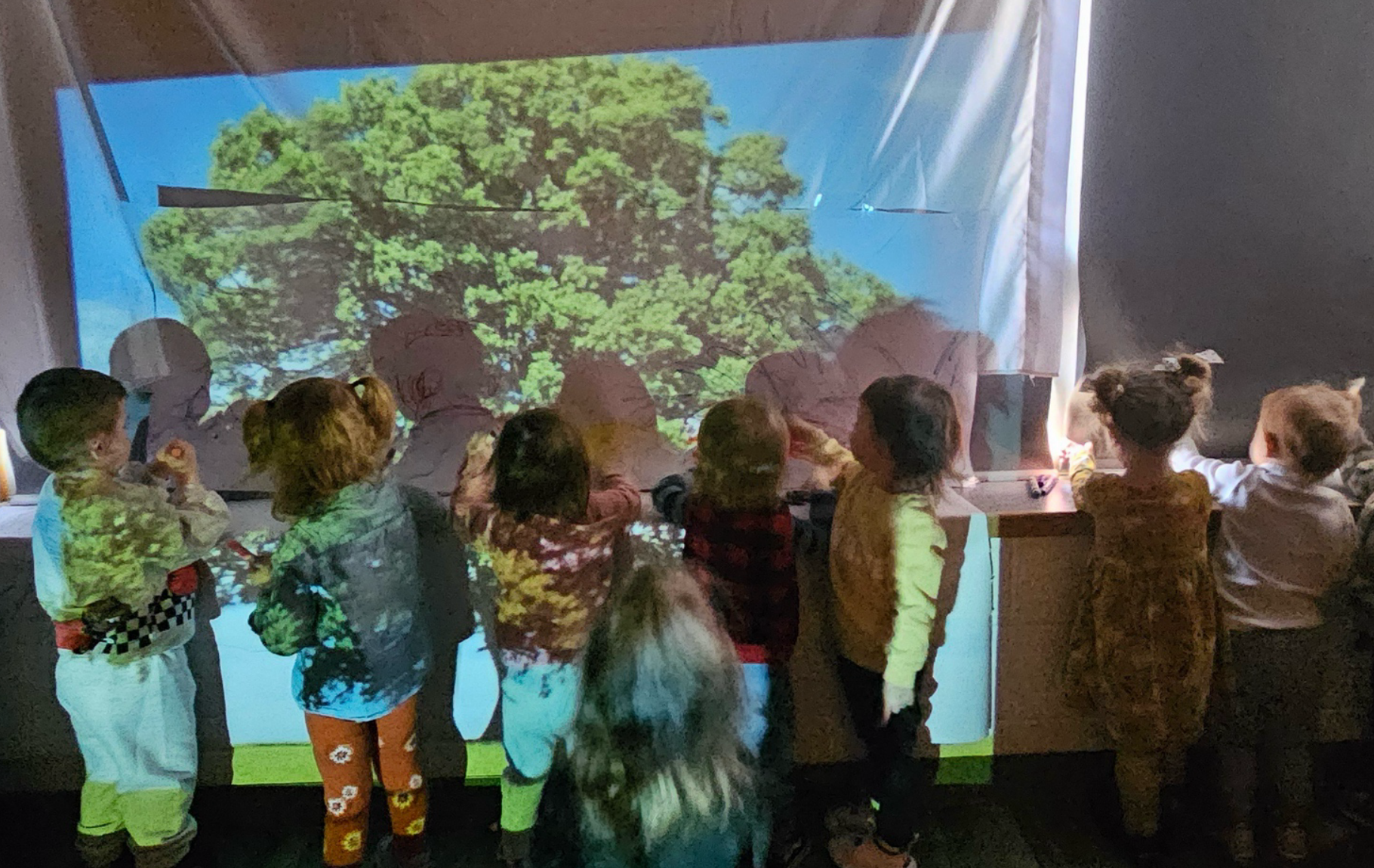
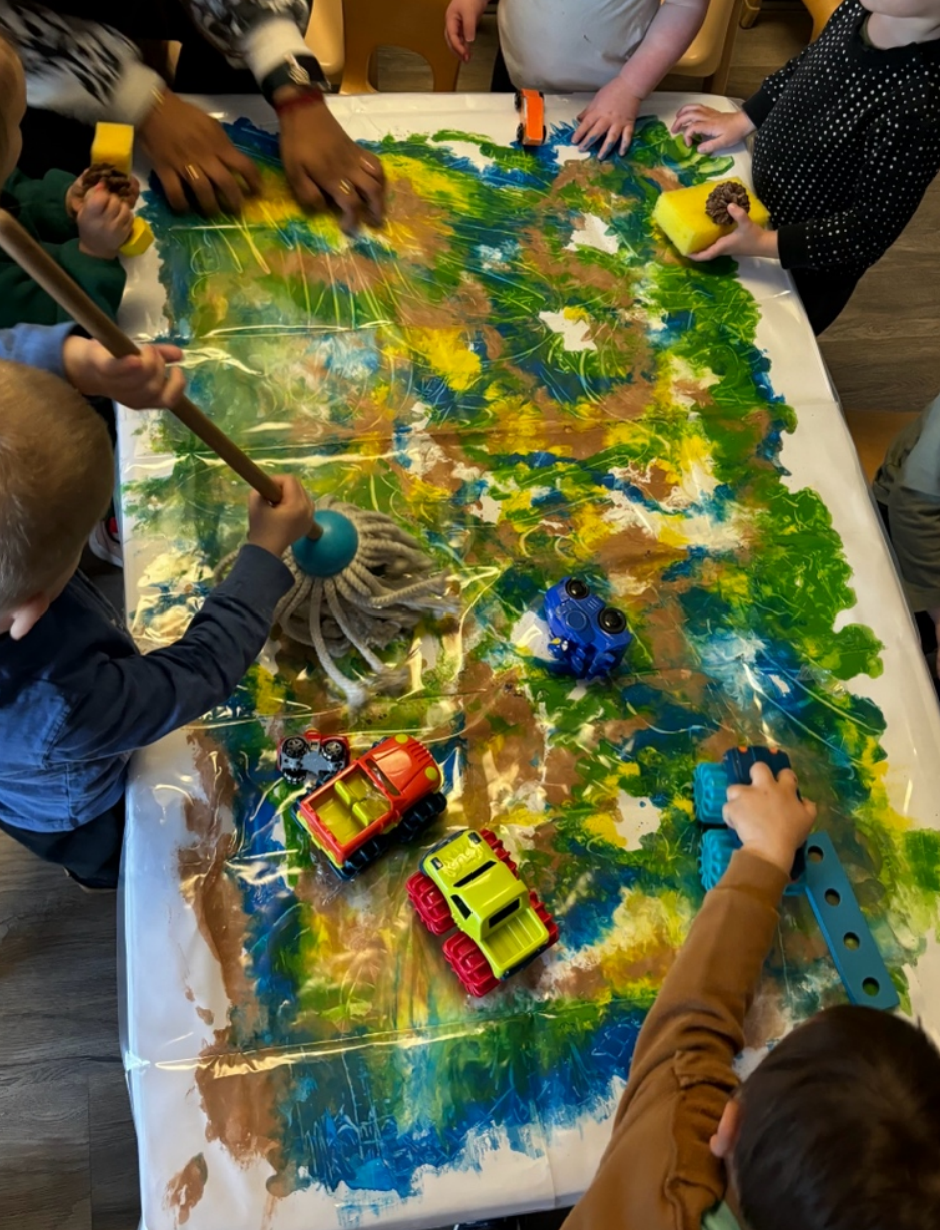
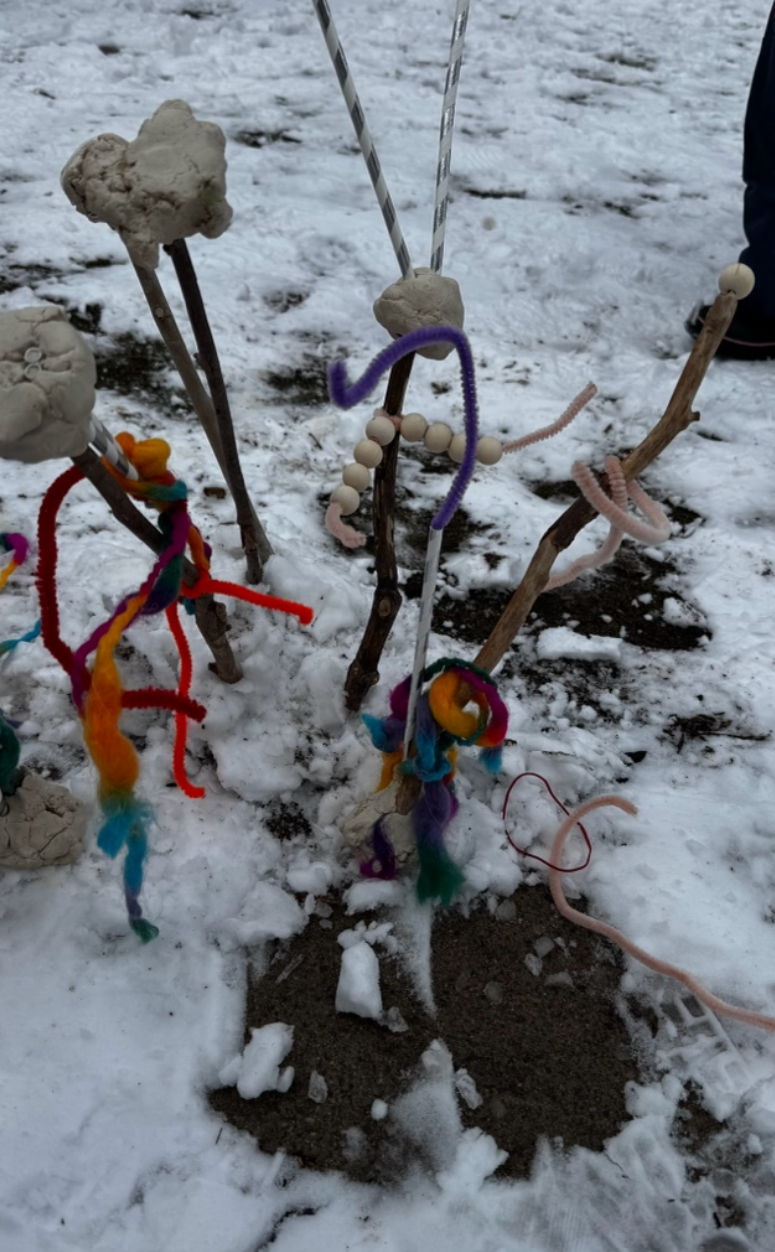
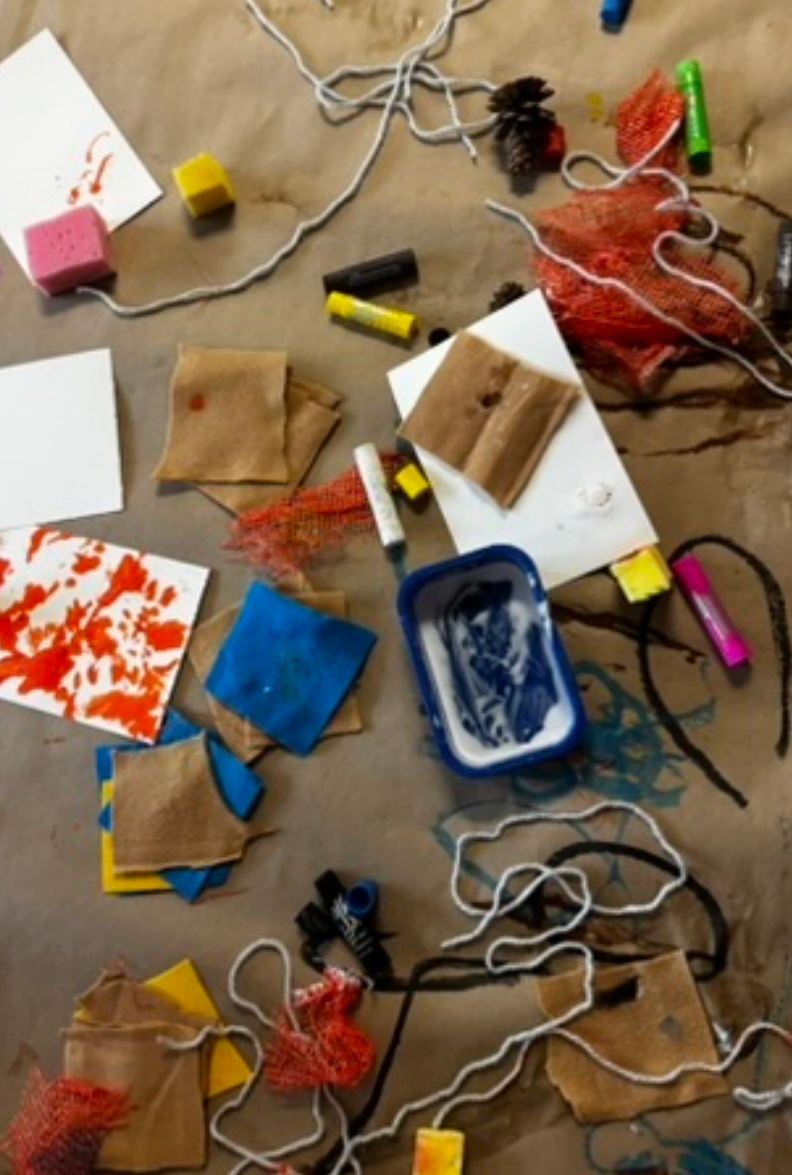
I wanted the children to see the forest but more than that, I wanted them to feel it. Each activity was designed to bring them closer to a material truth: that a tree can be drawn, built, printed, crushed, and pressed. That a forest can be made.
What...
Across the term, children encountered the forest through six different materials and six different ways of making. Each approach revealed something distinct about how children know trees not as a botanical
fact, but as a lived experience, a story, a structure, a colour, a feeling.
Toddlers were most drawn to sensation and process: the sound of crushing chalk, the stickiness of the in-between stage, the resistance of pulling tape, the reveal when a sheet is lifted. They made trees with
their hands before they could name them.
Preschoolers arrived with stories already formed. Trees had hair, wings, robot bodies, and one leaf. Forests were home to witches. Colours remembered from summer and winter came back at the drawing
table. The provocation did not give them ideas, it gave their ideas a place to land.
So What...
The forest as provocation worked because it was open enough to hold every child’s version of it. No two trees were the same. No two responses were the same. This is the Reggio principle at work: the environment as third teacher, the material as a mirror for what children already know.
Across the weeks, children moved from representing a tree (drawing it) to building one (clay) to making the materials a tree is made of (chalk pigment from the earth) to printing the ground a tree to claiming a
landscape in words (cellophane and naming) to becoming the tree itself (the handprint trunk and branches).
This is not a progression from simple to complex. It is a progression from outside to inside — from observing the forest to belonging to it.
Now What...
The forest is not finished. These children have only begun to find their way inside it.
• Return to the forest across seasons, let children observe what changes and what stays. Document the same provocation across a full year.
• Introduce natural pigments made from plants, berries, and soil. Let children make colour from the forest itself.
• Invite children to build a forest installation- structures, drawings, and handprints displayed together
as a complete environment.
• Create a documentation panel that shows the progression: drawing → building → making colour → printing → naming → the collective handprint tree. Make the arc of learning visible to families.
• Bring the forest inside: branches, bark, moss, seed pods, stones. Let the materials of the forest become art materials.
I began this term wanting to bring children closer to nature, to give them a way of knowing the forest through their hands and their imagination. What I did not anticipate was how much the
forest would give back. Each week, children arrived at the materials with worlds already inside them: robot trees, witches, memories of winter, a grandfather drawing beside his grandchild. My role was not to teach the forest. It was to make space for children to show me what they already knew about it.
The handprint tree at the end of the term is the image I carry. Not because it was beautiful, though it was, but because every single child is in it.
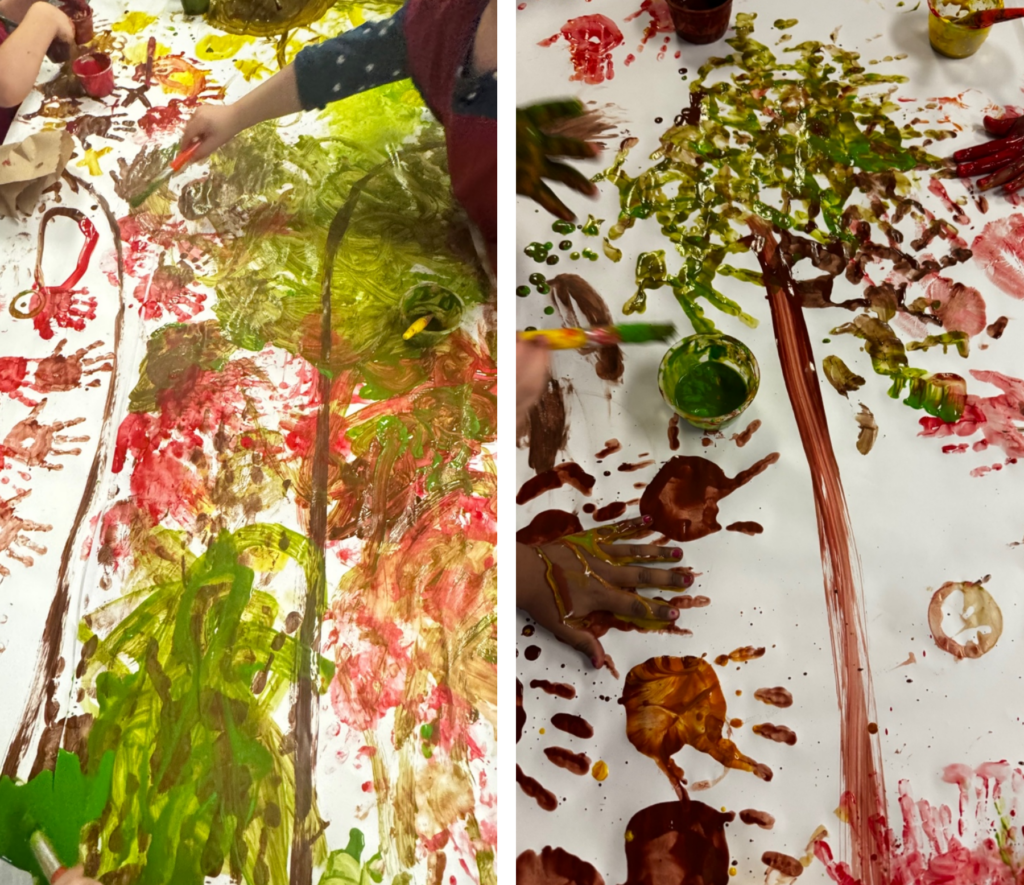
As the children worked together on the large paper, one child drew three trees and explained that they were her parents. She then brought over a small toy and said, ‘It’s my baby,’ placing the colour into the toy’s hand and pretending the baby was drawing too. Nearby, another child created a ‘robot tree,’ while others added wings, hair, and different colours to their trees. Together, the children placed all of their creations side by side to build a shared forest filled with imagination, storytelling, and collaboration.